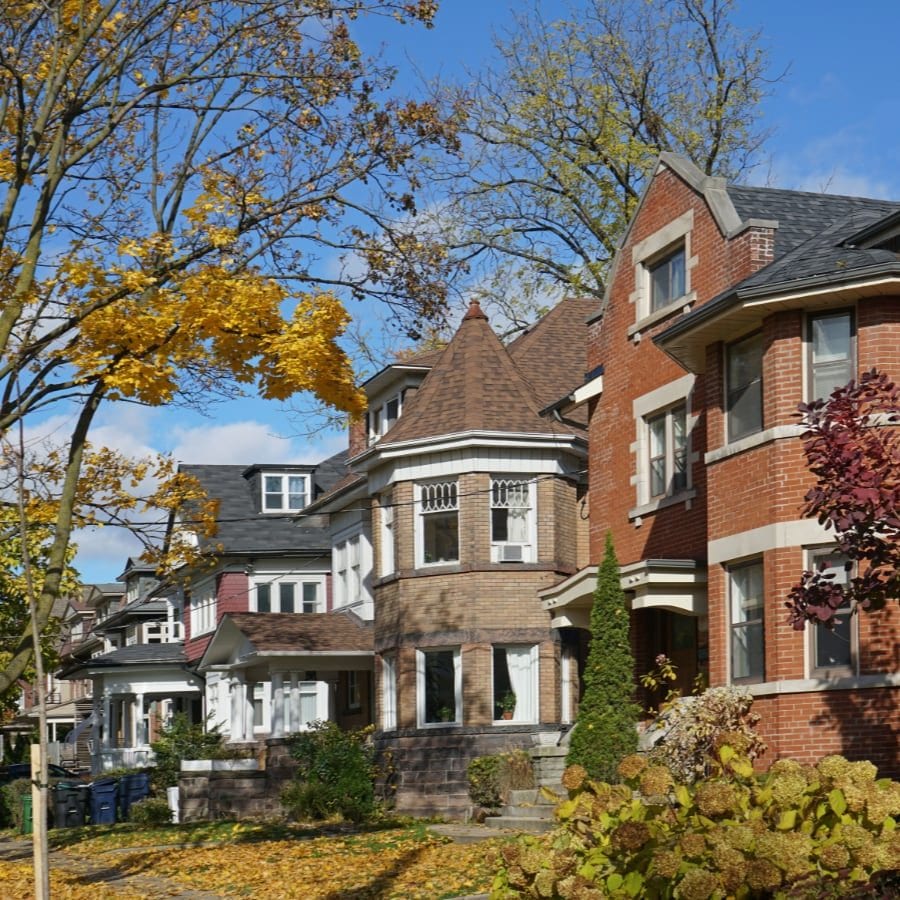

How Much Is Homeowners Insurance on a $400,000 House?

The short answer? It depends, because homeowners insurance isn’t based on what your home would sell for. It’s based on what it would cost to rebuild.
If your dwelling coverage is set at $400,000, this represents the cost to rebuild the physical structure of your home, not the land or market value. And that number is just the starting point.
For homeowners insurance on a $400,000 house, on average, expect to see annual premiums between $1,500 and $2,500, but local risk factors can pull that number up or down. We’ll look more into all the factors that play a role in how much you’ll actually pay.
Want a fast, personalized quote? Get started here.
Quick Answer: What $400,000 in Coverage Really Means
When an insurer quotes homeowners insurance on a $400,000 house, they’re referring to dwelling coverage, the amount it would cost to rebuild your home from the ground up. That doesn’t include the land, which typically doesn’t need to be insured.
Most policies pair that dwelling coverage with other standard protections:
- Personal Property – Usually 50–70% of the dwelling limit (e.g., $200K–$280K in this case)
- Liability Coverage – Often starts at $300,000
- Loss of Use – Covers temporary housing if your home is unlivable during repairs
- Medical Payments to Others – Pays small injury claims without lawsuits
Your deductible, typically ranging from $1,000 to $2,500, also affects the amount you’ll pay per year. A higher deductible usually means lower premiums, but more out-of-pocket if you file a claim.
What Affects the Price of Insuring a $400K Home?
Whether you’re wondering how much homeowners’ insurance is per month or what’s driving your annual premium, it comes down to a mix of factors insurers use to assess risk. Here’s what matters most.
Location and ZIP Code Risks
Where you live shapes your rate more than anything else. A home in a coastal area might face hurricane surcharges. ZIP codes with frequent hailstorms, high winds, or wildfire risks generally cost more to insure.
Example: Two identical homes, one in inland Illinois, another in storm-prone Florida, could have a $1,500 difference in yearly premiums just due to location.
Home Characteristics
The structure itself tells a story. A brick home with a new roof will often cost less to insure than an older wood-frame home with aging shingles. Roof material, plumbing age, electrical systems, and even square footage can tip the scale.
Example: A $400K home with a 10-year-old asphalt roof may cost $200–$400 more per year than one with a new impact-resistant roof.
Coverage Selections
The more you cover, the more it costs, but it might be worth it. Higher personal property or liability limits, endorsements for valuables (like jewelry or art), or additions like water backup coverage all increase your premium.
Example: Adding a jewelry rider for $20,000 of coverage could raise your premium by about $100/year. (Some riders require documentation.)
Deductible Choices
Choosing a higher deductible lowers your premium but increases your out-of-pocket costs if you file a claim. For storm-heavy regions, separate deductibles for wind or hurricanes may apply.
Example: Bumping your deductible from $1,000 to $2,500 could save $100–$300 annually, depending on your insurer and risk profile.
Claims History & Credit (Where Allowed)
Multiple past claims, even if they weren’t your fault, can increase your premium. In many states, insurers also use a credit-based insurance score to evaluate the likelihood of claims. Lower scores can mean higher rates.
Example: A clean claim history and strong credit could mean hundreds less per year compared to a policyholder with two recent claims.
What’s a Typical Monthly vs. Annual Cost?
Premiums vary, but using national and regional averages helps frame expectations. Generally, if you pay yearly or even every six months, you can expect to save some cash. However, paying monthly might make more sense if you can’t come up with the cash for a six- or 12-month payment.
In Illinois, homeowners may pay around $2,100 per year on average for home insurance.
That works out to ≈ $175/month.
- $2100/year ÷ 12 = ~$175/month
- Conversely, a monthly premium of $175 could also add installment fees, late fees, or other charges.
Here’s a mini‑glossary to keep things straight:
| Term | What It Means |
|---|---|
| Premium | What you pay (monthly or yearly) for your coverage |
| Deductible | What you pay out of pocket before insurance kicks in |
| Liability | Protection against injury or damage claims by others |
These figures are for general guidance. Your best next step is to get a custom quote, since rates shift dramatically based on location, building details, and coverage choices.
Request a sample quote for your area – Home Insurance
How Location Changes the Cost (State & ZIP Code Overview)
Why do two homes with the same value sometimes pay wildly different premiums? Location, location, location. Because your state and ZIP code drive risk exposure, rebuilding costs, and competition among insurers.
- Catastrophe risk: Some areas face higher exposure to windstorms, hail, flooding, or wildfires.
- Rebuild cost differences: Labor and materials vary by region.
- Regulation & market competition: Local laws and the number of carriers in your ZIP code can push rates up or down.
Here’s a compact snapshot:
| States / Regions | Relative Insurance Cost |
|---|---|
| Higher-than-average (e.g., coastal states, hurricane zones, parts of Florida, and Louisiana) | Much higher premiums due to greater catastrophe risk |
| Mid to lower-than-average (e.g., many Midwestern states, interior inland zones) | Lower but rising rates due to increasing storm activity, inflation, and other factors |
In Illinois, for example, costs have jumped sharply. A few years ago, a $350,000 replacement coverage policy ran about $1,968/year. More recently, that same coverage has been quoted near $2,942/year in many parts of the state. Chicago Sun-Times
If you live in suburban Chicago or a ZIP code within a storm corridor, expect premiums above the state average.
The catch: your ZIP code matters more than your state. Two houses 10 miles apart could pay vastly different rates. That’s why the best action is always to get a tailored quote.
Do I Need Exactly $400,000 in Coverage?
Not necessarily. Using $400,000 as a benchmark refers to dwelling coverage, the cost to rebuild your house after a total loss. But real costs often run higher because of:
- Inflation
- Building code upgrades
- Permitting and labor shortages
- Renovations or custom finishes
Many agents recommend adding a buffer, such as 10–20% above baseline rebuild estimates. And if you renovate later, your coverage should evolve too.
A smart approach? Use a replacement-cost estimator with your insurer, revisit it every few years, and always adjust after significant upgrades or remodels.
The last thing a homeowner wants is to be underinsured and face surprises in a real claim.
Ways to Lower Your Premium Without Underinsuring
The good news? You don’t need to skimp on coverage to find savings! We’ve found proven strategies to reduce costs without exposing yourself.
- Bundle your policies (home + auto) with the same insurer.
- Raise your deductible, if you can afford it in an emergency.
- Add protective devices, like monitored alarms, water shut-off sensors, and storm shutters. These can be low-cost ways to keep costs down.
- Harden your roof with impact-resistant shingles or metal roofs to lower risk.
- Maintain a clean claims history; frequent claims signal risk.
- Review and remove unnecessary endorsements you might no longer need.
Example: Raising your deductible from $1,000 to $2,500 might drop your premium by 10%–20%, but would mean you pay more if you file a claim.
Ready to see what your home’s insurance should cost?
Get a personalized quote today! Home Insurance with Liberty Insurance Agency
FAQs
Is $400,000 dwelling coverage enough?
It depends on your local rebuild cost, not the home’s market value. In some regions, $400K might cover a spacious home. In others, it may fall short. Many homeowners opt for extended or guaranteed replacement coverage to protect against cost overruns due to inflation, labor spikes, or code upgrades.
How much is homeowners’ insurance per month on a $400K home?
Annual premiums for a $400,000 dwelling policy vary widely, often ranging from $1,500 to $3,500/year, depending on the ZIP code, coverage levels, and deductible. That works out to about $125 to $290/month.
Example: a $2,100 annual premium = $175/month.
Lowering the deductible usually increases the monthly cost, while raising it lowers the cost but increases your out-of-pocket risk during a claim.
Why is my quote higher than my neighbor’s?
Even on the same street, no two quotes are alike. Differences in roof age, materials, recent claims, credit profile, deductible selection, and home renovations all influence pricing. For example, a newer roof or updated plumbing may qualify you for discounts your neighbor isn’t getting, or vice versa.
Does credit impact my rate?
Yes, in most states, insurers use a credit-based insurance score to assess risk. A higher score typically results in lower premiums. However, some states (like California and Massachusetts) limit or prohibit this practice. In Illinois, credit can be a factor, but not the only one.
What deductible should I choose?
It’s a tradeoff. A higher deductible (like $2,500) can save you hundreds per year in premiums, but you’ll pay more out-of-pocket if you file a claim. A lower deductible (like $500) costs more monthly but limits your exposure during a loss.
Rule of Thumb: Choose the highest deductible your emergency fund can realistically cover.
Contact Liberty Insurance Agency for a Quote
Liberty Insurance Agency, Inc. acts solely as an insurance agent and does not make any claims determinations. All claims are subject to review and decision by the respective insurance carrier in accordance with the terms and conditions of the policy.
Quotes are subject to current comprehensive loss underwriting exchange report (CLUE), credit, property inspection, company underwriter approval, and motor vehicle report (MVR). Most quotes are valid for 30-days.
Liberty Insurance Agency, Inc. is a subsidiary of Liberty Bank for Savings. Insurance products and services are not bank products or services nor are they FDIC insured or insured by any federal government agency. They are not a deposit or obligation of or guaranteed by Liberty Bank for Savings and may involve investment risk, including possible loss of principal. Applicants are individually underwritten and some individuals may not qualify.